Guide · Explainer
Separation of Property in the Philippines for Foreigners Marrying Filipinos
A practical guide to separation of property under Philippine law for foreign nationals marrying Filipino citizens, including timing, registration, family expenses, land limits, and cross-border cautions.

By Prenup.ph Team
Consult with legal counsel before relying on this article for your specific facts.
The Quick Answer
Under Philippine law, future spouses may agree before marriage that their property relations will be governed by complete or partial separation of property. This can allow each spouse to own, manage, and enjoy separate property and earnings, subject to the Family Code and the terms of the marriage settlement. It does not remove duties of support, family expenses, creditor rules, or constitutional restrictions on foreign ownership of Philippine land.
Key Takeaways
- 01A separation of property regime must be agreed in a marriage settlement before the marriage.
- 02If there is no valid marriage settlement, absolute community of property generally applies under the Family Code.
- 03Separation of property may be total or partial, depending on what the future spouses agree.
- 04Each spouse may own and administer separate property, but both spouses remain responsible for family expenses under the law.
- 05A prenup is not a workaround for the Philippine constitutional restriction on foreign land ownership.
- 06Cross-border assets, foreign-executed agreements, and foreign-law issues should be reviewed carefully before signing.
Many foreign nationals marrying Filipino citizens ask whether a prenuptial agreement can keep property separate after the wedding. The concern is usually practical: one or both parties may already own assets, have children from a prior relationship, run a business, or hold property in more than one country.
Under Philippine law, the question is not whether the couple trusts each other. The legal question is what property regime will govern the marriage, whether the agreement is made at the right time, and whether the document is effective against third persons and property registries.
For a foreign national marrying a Filipino citizen, separation of property can be useful. But it should be approached carefully. It is a property arrangement between future spouses, not a device to avoid family duties, defeat creditors, or create foreign ownership rights over Philippine land.
What does separation of property mean?
Separation of property is a property regime where each spouse generally keeps separate property. Under the Family Code, the future spouses may agree in their marriage settlements that separation of property will govern their property relations during the marriage.
In practical terms, this may mean that each spouse owns, possesses, administers, and enjoys his or her own separate property. Earnings from a spouse's profession, business, or industry may also belong to that spouse, together with fruits or income from that spouse's separate property.
The arrangement may be complete or partial. A complete separation of property regime is broader. A partial separation of property regime separates only the properties or categories listed in the agreement; property not covered may still fall under the default regime.
This is why the wording matters. A short clause saying properties are separate may not be enough for a couple with bank accounts, land concerns, foreign assets, business shares, inheritances, or prior family obligations.
Why must it be done before marriage?
The Family Code places strong importance on timing. Marriage settlements are executed before the marriage. Future spouses may choose absolute community, conjugal partnership of gains, complete separation of property, or another lawful regime, but the agreement must be made before the wedding.
If the couple marries without a valid marriage settlement, the default regime is generally absolute community of property. That can have serious consequences because the law, not the couple's later informal understanding, will determine how property is treated.
For foreigners, timing is especially important because embassy documents, apostilles, notarization, translations, foreign divorce or capacity documents, and scheduling can take time. The prenup should not be treated as a last-minute wedding form.
- The agreement should be in writing.
- It should be signed by the parties.
- It should be executed before the celebration of marriage.
- It should be prepared with the required formalities.
- It should be registered where needed, especially when third-party effects are involved.
Why do registration and third persons matter?
A marriage settlement is primarily an agreement between the future spouses, but Philippine law also considers its effect on third persons. The Family Code provides that marriage settlements and modifications do not prejudice third persons unless registered in the local civil registry where the marriage contract is recorded and in the proper registries of property.
This matters in real life. A spouse, creditor, buyer, bank, or registry may need to know whether a property is separate or subject to a marital property regime. If a property regime is not properly documented and registered, the couple may face avoidable disputes later.
Where documents are signed abroad or will be used across borders, apostille or authentication issues may also arise. An apostille usually deals with the authenticity of a public document for foreign use. It does not, by itself, decide whether the agreement is substantively valid under Philippine family law.
Does separation of property remove family duties?
No. A common misconception is that separation of property means each spouse is financially alone after marriage.
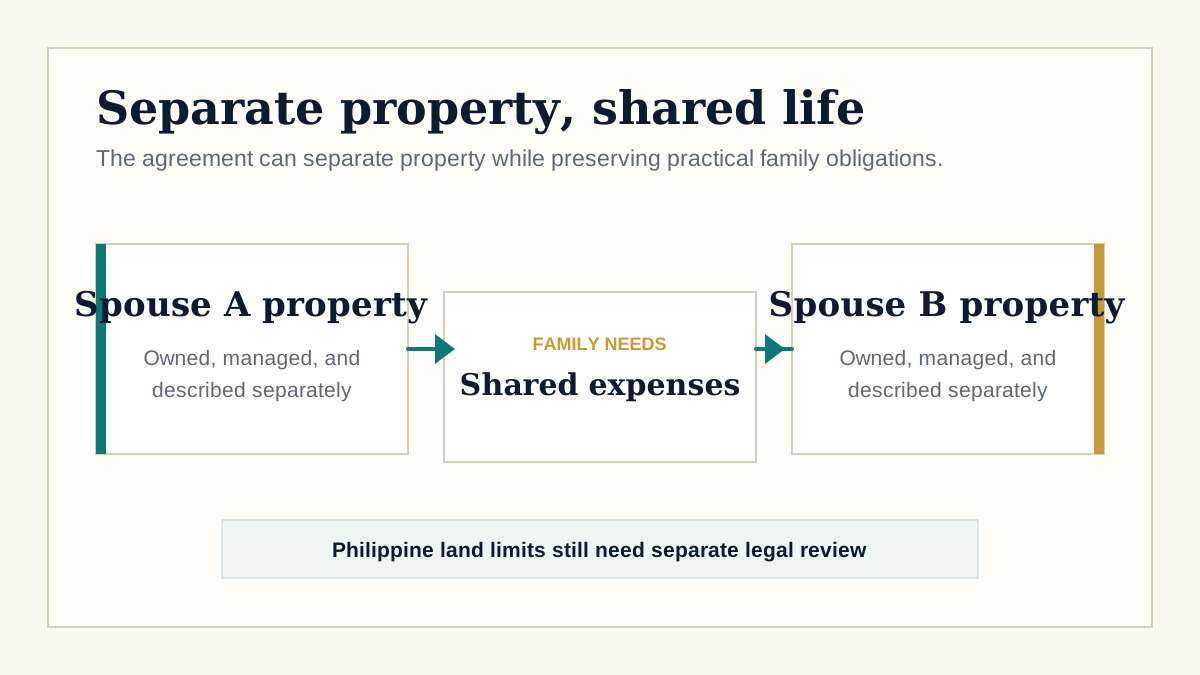
Even under separation of property, both spouses bear family expenses in proportion to their income, or, if income is insufficient or absent, according to the current market value of their separate properties. The Family Code also recognizes support obligations between spouses and within the family.
This means a prenuptial agreement choosing separation of property can clarify ownership and administration, but it should not be drafted as if marriage creates no shared responsibilities. A clause that attempts to eliminate legally required support or family obligations may create enforceability issues.
Why is it not a Philippine land workaround?
For a foreign national, one of the most important limits is Philippine land ownership.
The 1987 Constitution restricts the transfer of private land to those qualified to acquire or hold lands of the public domain, subject to limited exceptions such as hereditary succession. A prenuptial agreement cannot be used to give a foreign spouse ownership of Philippine land if the Constitution does not allow it.
Supreme Court decisions involving foreign spouses and Philippine property show how cross-border marriage agreements, property disputes, citizenship, and land ownership questions can become legally complex. The safe approach is not to design a transaction that treats the Filipino spouse as a nominee or placeholder for land ownership.
Why do cross-border assets need separate review?
A foreign national marrying a Filipino citizen may own property abroad, receive income abroad, or be subject to another country's marital property, tax, succession, or divorce rules. Philippine counsel can draft for Philippine-law purposes, but that does not automatically make the document effective in every foreign jurisdiction.
This is especially important where a party owns real property outside the Philippines, has children from a prior relationship, owns shares in a company, expects inheritance or trust distributions, may live abroad after marriage, or signs the agreement outside the Philippines.
In these situations, the agreement should be coordinated. Philippine counsel can address the Philippine property regime, while foreign counsel may need to advise on recognition, enforceability, and local formalities abroad.
Questions couples often ask
Can a foreigner and a Filipino choose separation of property before marriage?
Yes. Under the Family Code, future spouses may agree in their marriage settlements that separation of property will govern their property relations. The agreement should be made before the marriage and should comply with the required formalities.
What happens if we do not sign a prenup before the wedding?
If there is no valid marriage settlement, the default property regime under the Family Code generally applies. For many marriages, that default is absolute community of property.
Does separation of property mean I will never be responsible for family expenses?
No. Separation of property does not remove legal duties relating to support and family expenses. Under the Family Code, both spouses bear family expenses according to the rules on income and separate property.
Can a prenup allow the foreign spouse to own land in the Philippines?
No. A prenuptial agreement cannot override the constitutional restriction on foreign ownership of Philippine land. It should not be used to create a nominee arrangement or other structure meant to evade that restriction.
If we sign the agreement abroad, will it automatically work in the Philippines?
Not automatically. A foreign-executed agreement may raise issues on form, authentication, applicable law, proof of foreign law, and registration. It should be reviewed for Philippine-law compliance before the marriage.
Legal Review
General information only
This guide is for general information only. A Philippine prenup should be reviewed against the couple's wedding date, property goals, signing, notarization, registration, and any cross-border concerns. Use the Inquire button to share your situation with the team at Valerio Law for free so they can review fit before a proposal.
Source basis
Legal sources referenced
These sources are used to ground the article's discussion of Philippine marriage settlements, property regimes, and related legal limits. They are provided for context and do not replace case-specific legal review.
Related blogs

Prenup Philippines Foreigner: The Complete Guide for Foreign Nationals Marrying Filipino Citizens
Start here if you are a foreign national marrying in the Philippines and need the legal risk, timing, and next step explained clearly.
Read guide
No Prenup in the Philippines? What Happens Without One
If you marry in the Philippines without a prenup, the law supplies the property regime for you. For many Family Code marriages, that default is absolute community of property.
Read guideWant a prenup proposal?
Share the marriage timing and basic property-regime questions for free. The team reviews fit before sending next steps or a proposal.
Get Your Prenup Proposal