Guide · Explainer
No Prenup in the Philippines? What Happens Without One
If you marry in the Philippines without a prenup, Philippine law may supply the property regime. Learn what can happen before relying on default rules.

By Prenup.ph Team
Consult with legal counsel before relying on this article for your specific facts.
The Quick Answer
If you marry in the Philippines without a valid prenuptial agreement, your property relations will generally be governed by the default regime provided by Philippine law. For marriages covered by the Family Code, that default is usually absolute community of property, unless another valid property regime applies. The outcome still depends on timing, property type, title, citizenship, debts, and whether the marriage is governed by Family Code or pre-Family Code rules.
Key Takeaways
- 01A prenup is not required for a valid marriage, but without one, Philippine law supplies the property regime.
- 02For many marriages governed by the Family Code, the default regime is absolute community of property.
- 03Absolute community does not mean each spouse automatically owns a separate, fixed one-half share of every asset at all times.
- 04Certain properties, liabilities, and transactions still require careful legal analysis, especially inherited assets, titled property, business assets, and debts.
- 05A private agreement signed after the wedding is not the same as a pre-marriage settlement and may not change the property regime by itself.
- 06Couples married before the Family Code took effect may require a different analysis under the Civil Code and transitional rules.
Many couples ask about a prenuptial agreement only after the wedding plans are already moving. Others assume that if they do not sign one, nothing special happens. Under Philippine law, that is not quite correct.
A prenup is not what makes a marriage valid. However, it can determine how property will be owned, administered, charged with obligations, and divided later. If there is no valid prenup, the law does not leave the couple without rules. It supplies a default property regime.
The key point is this: marrying without a prenup can have serious property consequences, but those consequences should be stated carefully. It is not accurate to say that a spouse automatically owns half of everything in the other spouse's name.
What is the default rule if there is no prenup?
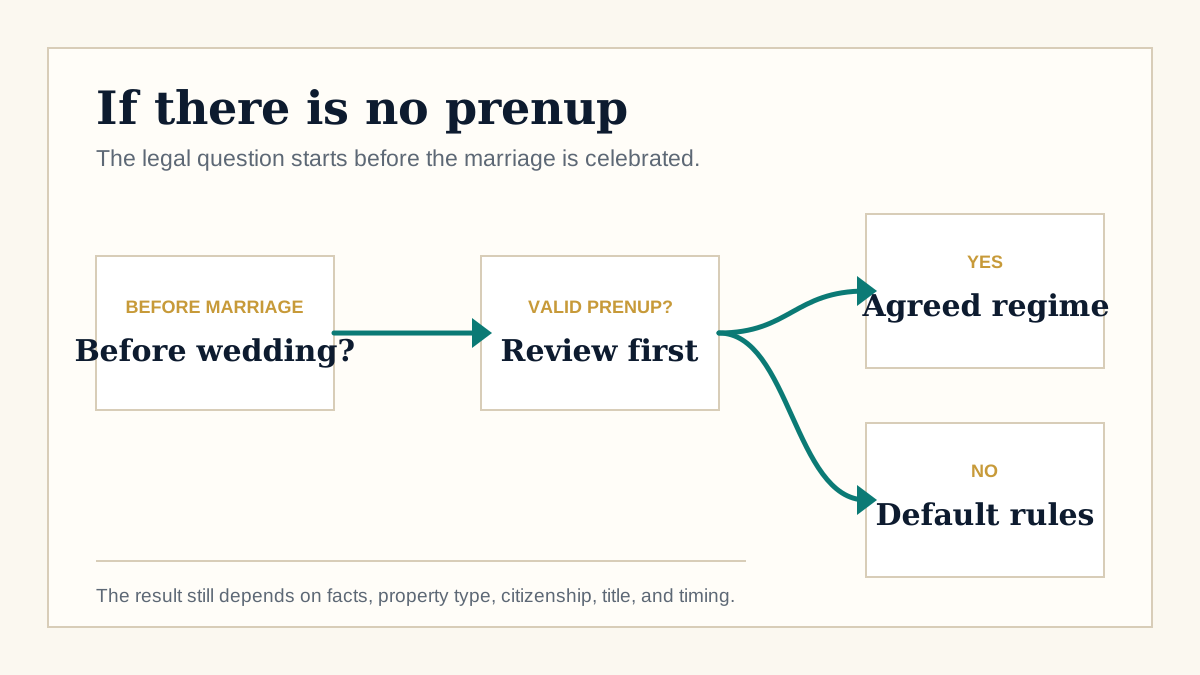
Under the Family Code, the property relations of spouses may be fixed in their marriage settlements. If there is no valid marriage settlement, or if the agreed regime is void, the default regime generally applies.
For marriages governed by the Family Code, the default regime is absolute community of property. This regime generally starts at the precise moment of marriage. In practical terms, the law treats the spouses as having a common property mass, subject to the rules, exclusions, liabilities, and liquidation process provided by law.
This is one reason timing matters. A prenuptial agreement is meant to be made before the celebration of marriage. Once the wedding has taken place, spouses cannot simply sign a private document and assume it has the same legal effect as a valid prenup.
Does this mean your spouse owns half of everything?
Not automatically. This is one of the most common misconceptions.
Under absolute community, the law creates a community of property, but that does not always translate into a simple, item-by-item half ownership in every asset. The spouses' actual shares are usually determined through liquidation, after identifying community property, exclusive property, obligations, advances, and deductions.
The distinction matters in real transactions. A title in one spouse's name does not always settle the question. On the other hand, the fact of marriage does not always mean the other spouse can freely claim a fixed half of every asset without looking at the legal basis.
- Property acquired before marriage may be treated differently depending on the applicable regime.
- Property acquired by inheritance or donation may require separate analysis.
- Assets used for business, family support, or registered in one name may still raise community or consent issues.
- The final economic result may only become clear after proper inventory and liquidation.
What happens to property brought into the marriage?
In many Family Code marriages under absolute community, property owned by the spouses at the time of marriage may form part of the community property, unless excluded by law or by a valid marriage settlement.
This is a major difference between marrying with no prenup and choosing a different regime, such as separation of property, before marriage. A properly prepared prenup can identify what remains separate, how future acquisitions will be treated, and how administration will be handled.
Still, the analysis should not be flattened. Some properties may be excluded. Some may be subject to constitutional or statutory restrictions. Some may be affected by title history, source of funds, inheritance documents, donor conditions, corporate records, or foreign law.
Who can sell, mortgage, or manage property after marriage?
Under the Family Code, both spouses are generally involved in the administration and enjoyment of community property. For important transactions, especially disposition or encumbrance of community property, written consent or court authority may be required.
This does not mean every everyday act requires a formal signature from both spouses. But for major property transactions, the absence of spousal consent can create serious legal issues.
In practice, banks, buyers, notaries, and registries often ask about marital status because the property regime may affect whether a transaction can safely proceed. A title showing only one spouse's name may not end the inquiry.
Can spouses change the property regime after the wedding?
A post-wedding private agreement should not be treated as the same thing as a prenuptial agreement. The Family Code generally requires modifications to marriage settlements to be made before the marriage, subject only to specific legal exceptions.
After marriage, separation of property may take place only through legally recognized routes, such as a judicial order for voluntary or sufficient cause-based separation of property. The Family Code also requires registration of the petition and final judgment in the proper civil and property registries.
This is why couples should not rely on informal post-wedding documents for property-regime planning. They may still have evidentiary or contractual relevance in some contexts, but they are not a substitute for a valid pre-marriage settlement or a court-approved legal remedy.
Questions couples often ask
Is a prenup required before getting married in the Philippines?
No. A prenup is not required for a valid marriage. But if the couple does not execute a valid prenup, Philippine law supplies the default property regime.
If we marry without a prenup, does my spouse automatically get half of my assets?
Not in that simple way. Under absolute community, there may be a common mass of property, but actual rights and shares depend on the applicable regime, exclusions, liabilities, and liquidation.
Can we sign an agreement after the wedding to separate our properties?
A private post-wedding agreement does not have the same effect as a valid prenup. Separation of property during marriage generally requires a judicial order, except where the law provides otherwise.
Does the name on the title decide whether property is exclusive or community property?
Not always. Title is important evidence, but marital property rules may still require analysis of when and how the property was acquired, the applicable regime, source of funds, consent, and statutory restrictions.
Do these rules apply to marriages before the Family Code?
Not automatically in the same way. Marriages before the Family Code may be governed by Civil Code rules, so older marriages need separate review.
Legal Review
General information only
This guide is for general information only. A Philippine prenup should be reviewed against the couple's wedding date, property goals, signing, notarization, registration, and any cross-border concerns. Use the Inquire button to share your situation with the team at Valerio Law for free so they can review fit before a proposal.
Source basis
Legal sources referenced
These sources are used to ground the article's discussion of Philippine marriage settlements, property regimes, and related legal limits. They are provided for context and do not replace case-specific legal review.
Related blogs

Prenup Philippines Foreigner: The Complete Guide for Foreign Nationals Marrying Filipino Citizens
Start here if you are a foreign national marrying in the Philippines and need the legal risk, timing, and next step explained clearly.
Read guide
Separation of Property in the Philippines for Foreigners Marrying Filipinos
A prenuptial agreement choosing complete separation of property can help clarify what each spouse owns and manages during marriage, but it must be prepared before the wedding.
Read guideWant a prenup proposal?
Share the marriage timing and basic property-regime questions for free. The team reviews fit before sending next steps or a proposal.
Get Your Prenup Proposal